Latest Articles & Blog
Valuable tips and resources to grow your Amazon business




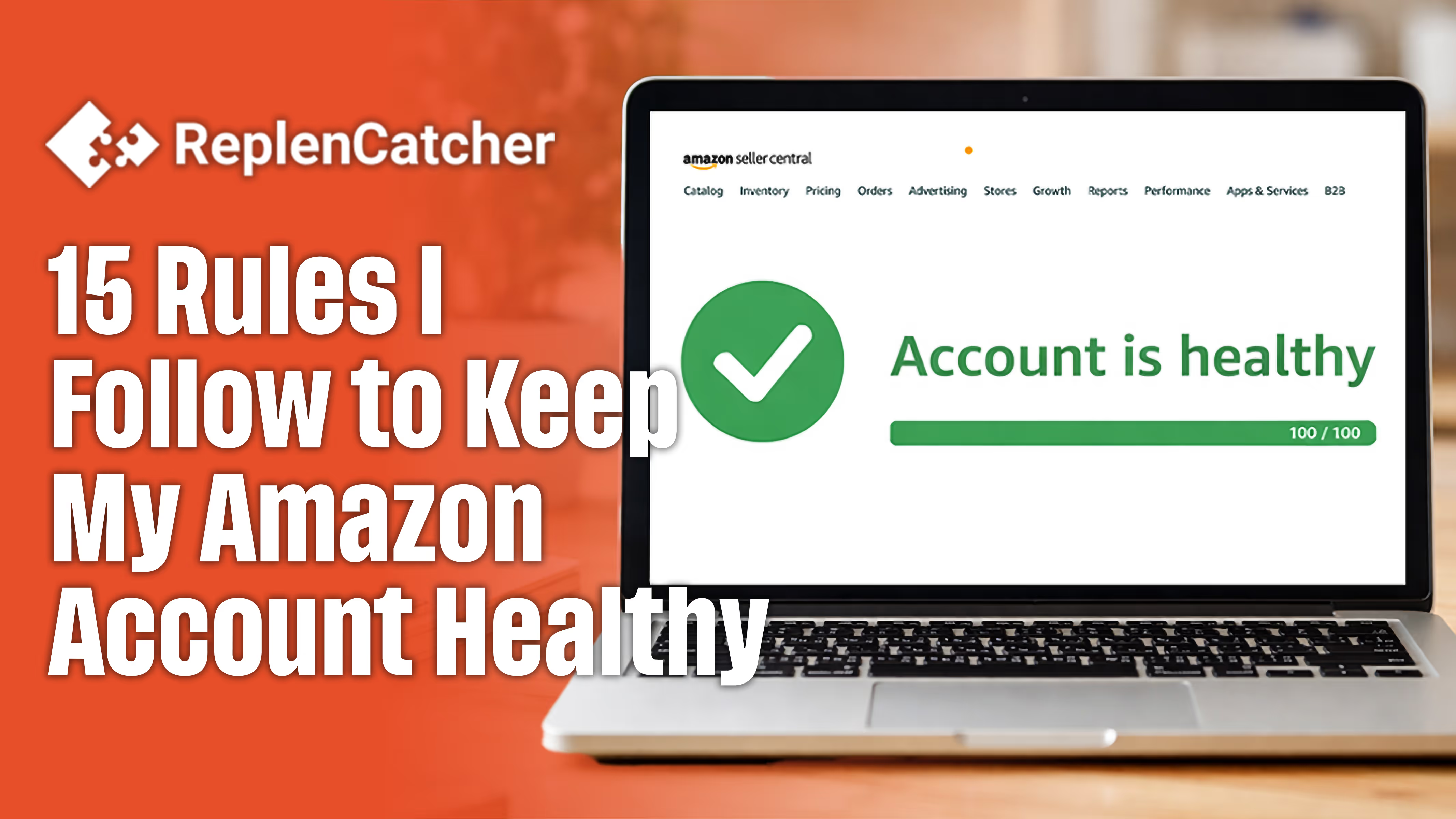
I wanted to write this because a lot of people say eBay to Amazon flipping is extremely risky. In my experience, it can be a lot safer than people make it out to be, but only if you treat account health seriously and follow real rules.
This is not theory for me. My account health is clean, and I have sold almost 40,000 products for around $4 million over the last 5.5 years. That does not mean nothing can ever go wrong. Some things are outside your control. But a lot of sellers create their own problems by chasing risky products, ignoring red flags, and operating without solid filters.
These are the rules I keep in mind to help keep my business clean. They are not about playing scared. They are about being selective, using common sense, and building systems that make bad decisions less likely.
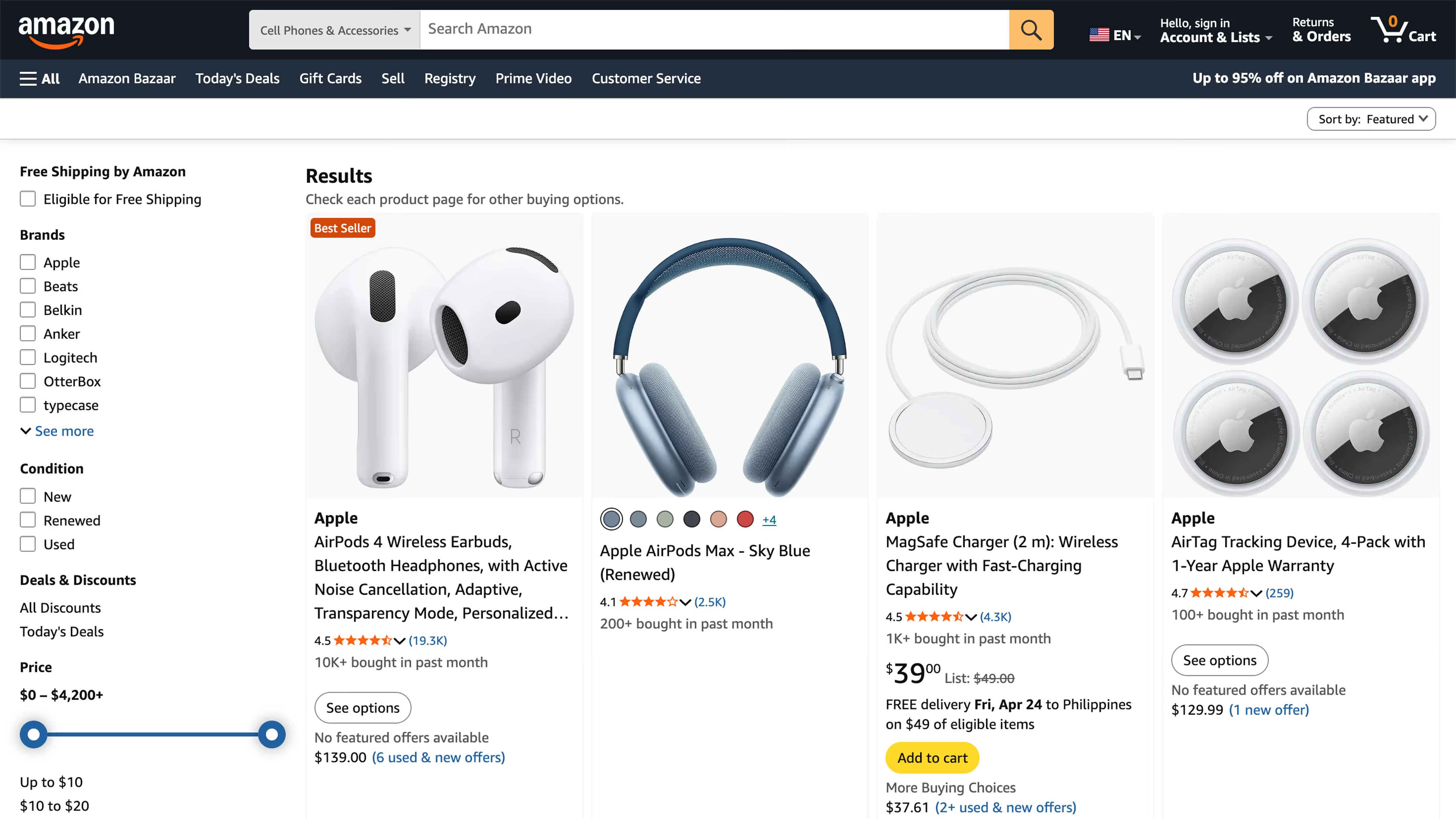
One of the biggest things I watch is how hot an item is. In general, the hotter the item, the more careful I get.
If something is super popular, selling fast, and in high demand, that can bring more problems with counterfeit risk and IP risk. Those are often the products everyone is chasing, which means they also attract more attention and more trouble.
That does not mean every fast seller is bad. It just means I raise my standards when something looks especially hot.
When I see an item on eBay priced low and selling on Amazon for a huge markup all day long, I do not treat that as an automatic win.
A lot of sellers get blinded by the ROI. I try to do the opposite. If the deal looks too easy, I slow down and ask more questions. Why is it so cheap? Why is the spread so wide? What might I be missing?
A great-looking deal should make you more careful, not less.
When I see an eBay seller with 10, 20, 30, 40, or 50 of the same item, I pay attention.
That is not automatically a problem in every niche. In some categories, that can be normal. But in many situations, it can be a red flag. I want to know who the seller is, how long they have been selling, and what their feedback looks like.
Seller quality matters. A listing is never just about the item. It is also about who is behind it.
If a seller has a large quantity available and the listing also shows a lot already sold, while the Amazon price is much higher, I get even more cautious.
That combination can be a sign that something unusual is going on. DVDs are one category where I would be especially careful with this. In other categories, it may be more normal, so this is where common sense matters.
I try to look at the whole picture instead of reacting to one signal by itself.
Inside a brand, I usually treat the newer and faster-selling ASINs with more caution.
What I have noticed is that brands often care more about the hotter and more popular products in their catalog. Older, slower-moving, or discontinued items can sometimes be a different story.
That does not make those products automatically safe. It just means I am usually more cautious with the fast movers because they tend to attract more attention.

A lot of sellers only think about whether the brand will come after them. I think that is only half the picture.
The other half is the customer. If a customer says an item is fake or inauthentic, that can create problems too. So I am not only trying to avoid brands that feel risky. I am also trying to avoid products that seem more likely to trigger those kinds of complaints.
Account health is not just about what the brand might do. It is also about how the customer experiences the product.
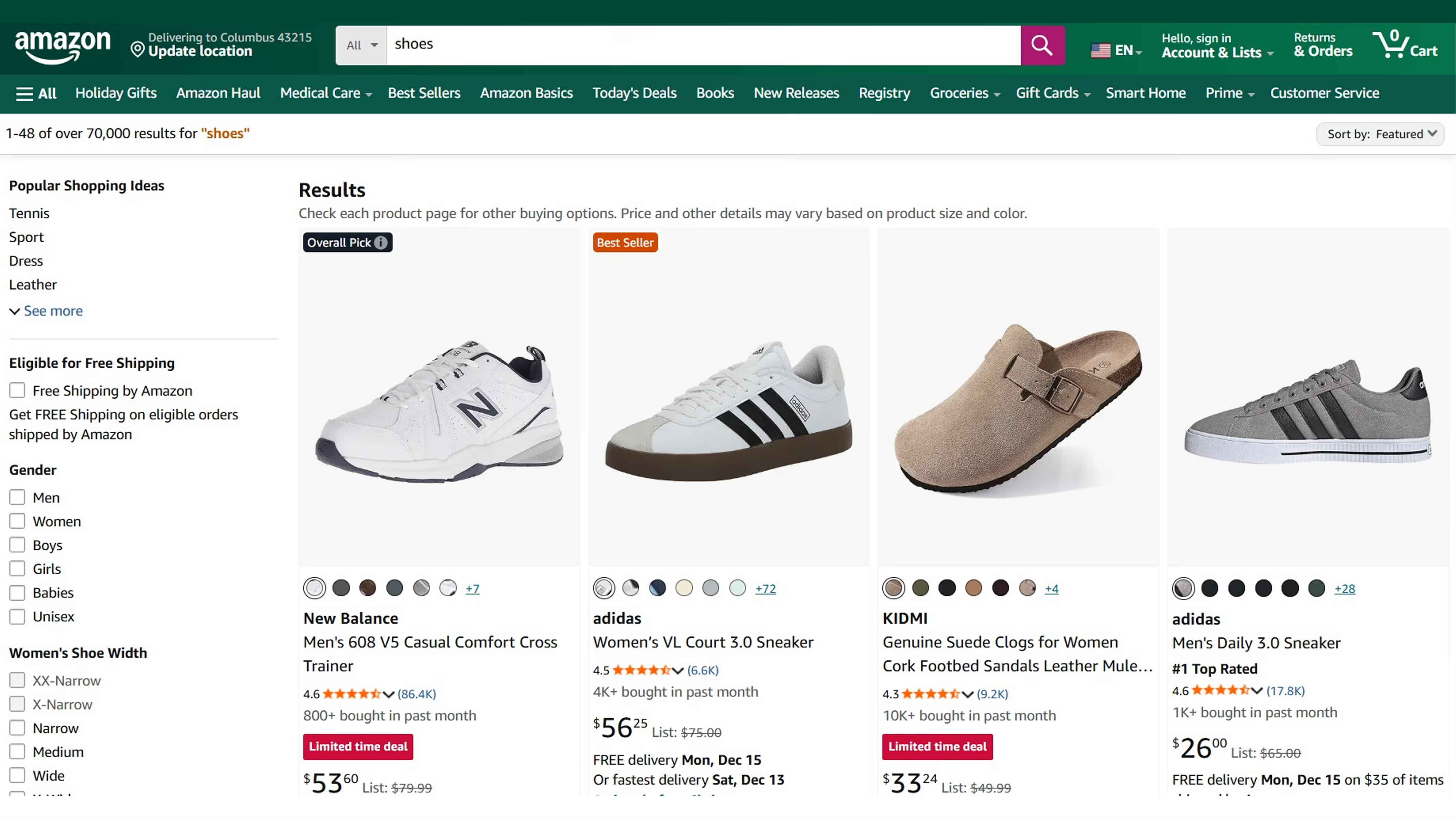
There are some products I just do not want to mess with, even if the profit looks good.
If a product is known for having a lot of fakes in the market, and those fakes are very convincing, sometimes I am out right away. I do not need to force it. There is plenty of money to be made elsewhere.
One of the best filters you can build is knowing when to walk away.

Keepa is one of the first things I check because it tells me a lot before I buy.
I am looking at seller count, how the listing moves, whether it looks stable, and whether anything feels unusual. I am not using it to make the whole decision by itself, but I do use it to get a better feel for what I might be stepping into.
For me, Keepa is an early warning tool. It helps me spot listings that deserve a closer look.
I also pay attention to whether the brand is on the listing or whether the listing looks controlled.
If the brand is present, if the seller rotation looks unusual, or if something feels off about the listing, I become more cautious. I am not saying that automatically means no. But it absolutely gets my attention.
Sometimes the biggest value is simply noticing that a listing deserves a second look.
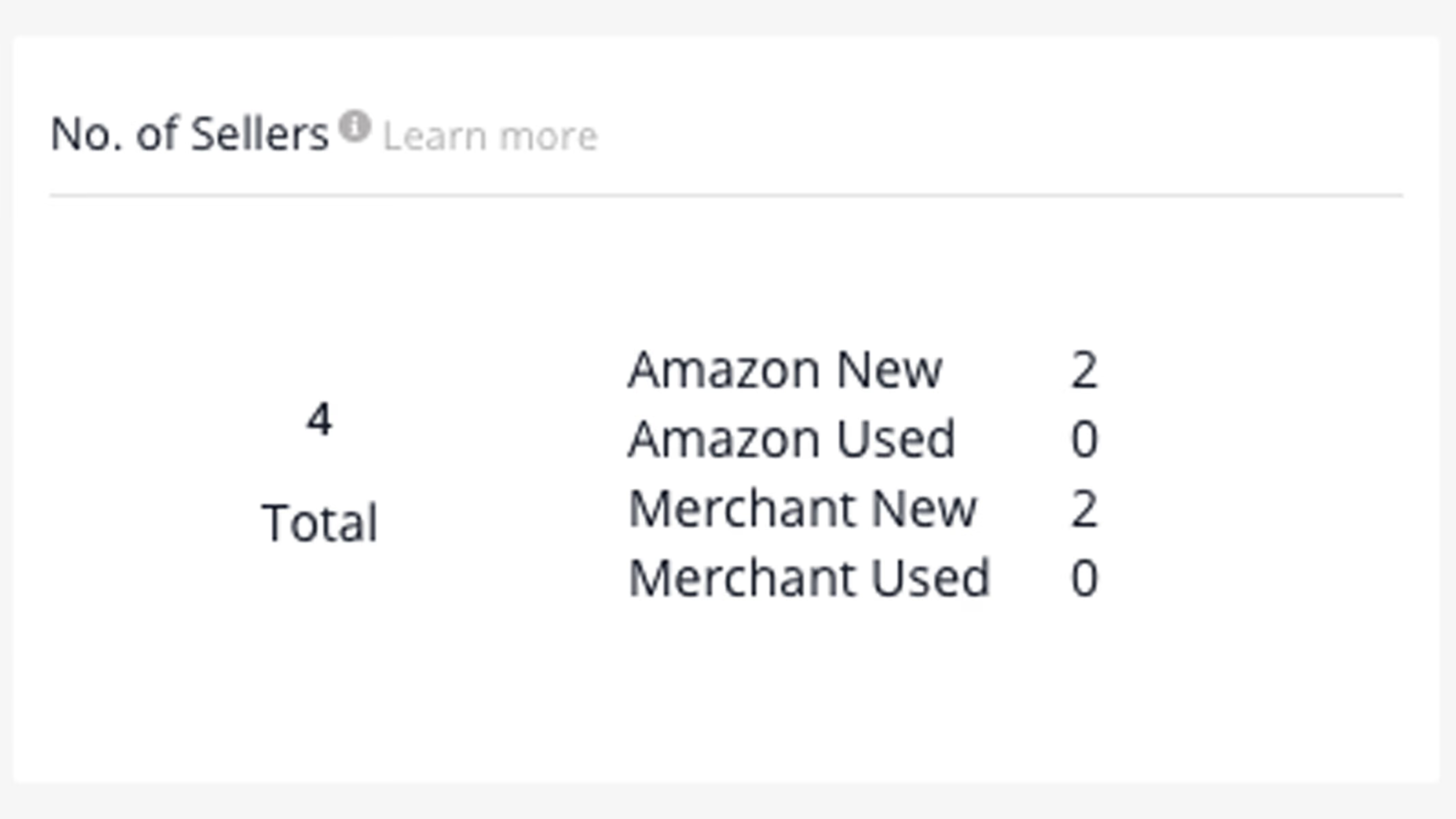
I do not just care about how many sellers are on a listing. I care about who those sellers are and how the listing behaves over time.
Some listings look sketchy. Some look controlled. Some have seller counts moving up and down in a way that feels strange. Those details matter to me because they can tell you a lot about the kind of environment you are entering.
A seller count by itself is not enough. Context matters.

Reading reviews is underrated.
I want to know what customers are actually saying. If I see repeated complaints about items being fake, missing parts, poor quality, wrong packaging, not playing properly, or missing episodes, I pay attention.
One complaint is one thing. A pattern is something else. I care much more about repeated signals than one random negative review.
.avif)
You have to do your homework on the actual item.
I look at the manufacturer website, sold listings, packaging, colors, fonts, and small details that help confirm whether something looks right. Sometimes the differences are subtle, but subtle differences can matter.
If you do not know what the real item is supposed to look like, it becomes much harder to spot trouble before you buy.
.avif)
For sellers who are more paranoid about account health, I think FBM can make a lot of sense.
I have friends who prefer it because it gives them more control. There can also be lower refund rates in some situations, and less inventory sitting at Amazon. Depending on your business and your risk tolerance, that can be a valid way to look at it.
It is not the right fit for everyone, but the extra control can matter.

One of the biggest advantages in eBay to Amazon is what happens once you find something that has already proven itself.
If I have sold an item multiple times, the return rate is low, I have not had issues, and it has been safe, I can keep leaning into it. I do not always need to chase a new ASIN or a new brand.
Some of the safest money is in products I already know.
This is what it all comes down to.
A lot of sellers get themselves into trouble because they chase hot products, ignore obvious red flags, and never build strong filters. My goal is not to be reckless. My goal is to make good decisions again and again.
If you slow down, use common sense, and build real systems for what you will and will not buy, this business can be much safer than people think.
eBay to Amazon is not risk free. No business is. But I do believe a lot of risk can be reduced when you stop chasing every shiny object and start operating with discipline.
That is how I have approached it. I try to stay aware of what I am buying, who I am buying from, how the listing behaves, what customers are saying, and whether the product has already proven itself safe. Those habits add up over time.
For me, keeping an account healthy is not about finding one magic trick. It is about following practical rules, paying attention to red flags, and staying selective even when the profit looks tempting. That has been a big reason my account health has stayed clean.
Be the first to know about new features, product updates, and improvements — no spam.
Valuable tips and resources to grow your Amazon business
Join thousands of sellers using Replen Catcher to source profitable inventory faster.